The San Francisco Sheriff’s Office is in the midst of a staffing crisis, severely impacting its ability to maintain safety and respond effectively to emergencies. The recent blockage of the Golden Gate Bridge by pro-Palestinian protesters underscored the department’s challenges, with off-duty deputies being urgently called in to address the situation due to the staffing shortfall.
One of the most pressing issues exacerbated by the staffing shortage is the escalating violence within the jails, including an alarming rise in prisoner fights and attacks on deputies. These incidents not only jeopardize the lives of deputies but also compromise the safety and security of inmates and staff. The lack of adequate staffing has made it increasingly difficult for the Sheriff’s Office to manage these incidents and ensure the safety of all involved.
Who is going to respond? We are running out of Deputy Sheriffs!
In addition to internal challenges, the Sheriff’s Office is also facing external pressures, such as civil unrest and protests, which have become more frequent and intense. These events require a significant law enforcement presence to maintain order and protect public safety. However, the staffing shortage has forced the department to stretch its resources thin, raising concerns about its ability to respond effectively to such events.
Addressing the current staffing crisis at the Sheriff’s Office requires immediate and decisive action. Hiring must be made a top priority, with a focus on fast-tracking the recruitment process to quickly fill vacant positions. The Sheriff’s Office should explore all available options to expedite hiring, including streamlining application processes and offering incentives to attract qualified candidates.
In conclusion, the staffing crisis facing the San Francisco Sheriff’s Office is a critical issue that demands urgent attention. Failure to address this crisis not only endangers the safety of deputies and inmates but also undermines the department’s ability to maintain public safety during times of civil unrest and protests. It is imperative that immediate steps are taken to increase staffing levels and ensure that the Sheriff’s Office is adequately equipped to handle the challenges it faces.
In a shocking turn of events, the City and County of San Francisco has revealed its true colors in the latest contract negotiations with Deputy Sheriffs. Despite years of dedicated service and sacrifice, Deputy Sheriffs are being offered a meager 1% longevity incentive if they continue to work past 20 years.
This offer is not just insulting; it’s a blatant disregard for the safety and security of San Francisco’s residents. While Deputy Sheriffs are offered a mere $53 per paycheck to delay their well-deserved retirement, the City has shown a stark contrast in its treatment of other departments.
In 2023, Dispatchers were given a 5% longevity incentive, totaling over $1.5 million distributed to eligible dispatchers, to retain them from retiring. The police department fared even better, with an additional 13% in longevity incentives, totaling a staggering $65.85 million distributed to eligible officers.
With 160 Deputy Sheriffs eligible to retire this year after dedicating at least 20 years of their lives to serving and protecting the City, the City’s offer is not just a slap in the face; it’s a betrayal of trust. It sends a clear message that the City does not value the contributions and sacrifices of Deputy Sheriffs.
Moreover, the San Francisco Sheriff’s Office (SFSO) is facing a severe staffing shortage, currently short-staffed by -178 deputy sheriffs. This shortage has led to overworking of Deputy Sheriffs with forced overtime, putting additional strain on an already taxed workforce.
Adding to the problem is San Francisco’s notoriously long and slow hiring process. What will San Francisco do when $53 dollars a paycheck does not retain Deputy Sheriffs from retiring? The consequences could be catastrophic. The courts could come to a grinding halt, jails could become out of control, inmates and employees would be at risk, and there would be fewer deputies on the streets for public safety. The entire system could collapse under the weight of these challenges.
It’s time for the City to wake up and recognize the dedication and commitment of Deputy Sheriffs. They deserve a fair and respectful longevity incentive that reflects their years of service and ensures the continued safety of San Francisco. Anything less is a disgraceful betrayal of those who put their lives on the line every day to keep our city safe.
In recent years, San Francisco has faced a growing challenge with illegal drug use, particularly with highly addictive and deadly substances like “tranq” Xylazine and Fentanyl. These drugs have contributed to an alarming number of drug overdose deaths, highlighting the urgent need for effective interventions to address this public health crisis. As the city seeks solutions, one approach gaining attention is the concept of Incarceration-Based Rehabilitation. This method involves providing rehabilitation programs within the criminal justice system, utilizing the resources of the San Francisco Sheriff’s Office (SFSO) to offer a controlled environment for individuals with substance use disorders to receive treatment and support.
The key to this approach lies in recognizing the intertwined nature of substance abuse and criminal behavior. Many individuals who engage in illegal drug use find themselves caught in a cycle of addiction and criminal activity, often leading to incarceration. Traditional punitive measures, such as imprisonment without addressing the underlying issues, have proven ineffective in breaking this cycle. Incarceration-Based Rehabilitation seeks to address both the criminal behavior and the root cause of substance abuse through a comprehensive program.
The SFSO plays a central role in this approach by leveraging its resources and expertise to create an environment conducive to rehabilitation. Deputy Sheriffs, who are already responsible for maintaining order and security within jail facilities, can be trained to provide support and guidance to individuals with substance use disorders. By working closely with trained professionals, participants in the program can access a range of services tailored to their needs, including counseling, medical treatment, and vocational training.
One of the key advantages of Incarceration-Based Rehabilitation is its ability to provide a structured and supervised environment for individuals to address their substance abuse issues. Unlike traditional treatment programs that rely on voluntary participation, this approach offers a more controlled setting where participants are encouraged to engage in treatment and are held accountable for their progress. By integrating rehabilitation into the criminal justice system, the program can also ensure that individuals receive the support they need while serving their sentences, increasing the likelihood of successful reintegration into society upon release.
Moreover, Incarceration-Based Rehabilitation can be a cost-effective solution for San Francisco. By addressing substance abuse issues within the criminal justice system, the program has the potential to reduce recidivism rates, leading to long-term savings associated with lower incarceration and criminal justice costs. Additionally, by breaking the cycle of addiction and criminal behavior, the program can contribute to a safer and healthier community, benefiting the city as a whole.
Importantly, this system is designed not only to address the substance abuse issues but also to attend to the overall well-being of the individuals in the program. Participants will have access to healthcare, including medical and mental health services, to address any underlying health conditions or mental health needs. They will also receive clean clothing, access to bathing facilities, and a clean environment, promoting hygiene and overall health. Deputy Sheriffs will ensure their safety, creating a secure environment conducive to recovery.
Given the grave risks associated with drugs like “tranq” Xylazine and Fentanyl, providing a comprehensive program like Incarceration-Based Rehabilitation is crucial for keeping individuals alive and getting them on the path to recovery. By offering a holistic approach that addresses both the substance abuse issues and the broader needs of the individuals, this system has the potential to make a significant impact on the lives of those struggling with addiction in San Francisco. Will San Francisco value human life and do this to stop the cycle of addiction and overdose deaths?
San Francisco’s Tenderloin District has faced longstanding challenges related to drug use, crime, and homelessness. Despite efforts to address these issues, the district continues to struggle with illegal drug markets, public health hazards, and social disorder. San Francisco’s approach, which has focused on social justice ideas and initiatives with minimal consequences for illegal activities, has failed to yield significant improvements.
The city has allocated considerable resources to various programs and initiatives aimed at addressing the problems in the Tenderloin District. However, the lack of a robust enforcement strategy and a reliance on social justice principles have not effectively deterred illegal drug use or reduced the negative impacts on the community.
It is evident that the city’s current approach is not working, as evidenced by the persistent challenges faced by the Tenderloin District and other areas of San Francisco. The failure to address these issues has resulted in a waste of public funds and a deterioration of the quality of life for residents and businesses in the affected areas.
To remedy this situation, San Francisco must prioritize the rule of law in its efforts to fix the Tenderloin District. This entails:
Focused Law Enforcement: Implementing a targeted and robust law enforcement strategy to disrupt illegal drug markets and criminal activities in the district.
Incarceration-Based Rehabilitation: Providing rehabilitation programs within the criminal justice system to offer a controlled environment for individuals with substance use disorders to receive treatment and support.
Zero Tolerance for Illegal Drug Activities: Adopting a zero-tolerance policy for illegal drug use and trafficking to send a clear message that such activities will not be tolerated.
Community Engagement: Engaging with local stakeholders to build trust and collaboration in addressing the root causes of the issues in the Tenderloin District.
Transparent and Accountable Spending: Ensuring that public funds are allocated transparently and used accountably to maximize their effectiveness in addressing the challenges faced by the district.
By prioritizing the rule of law and taking decisive action to address the issues in the Tenderloin District, San Francisco can work towards creating a safer, cleaner, and more livable environment for all its residents. Stop Dancing Around the Issue San Francisco, this is a working plan!
In the dynamic world of law enforcement, it’s essential to continuously seek innovative approaches to bolster our teams. Building upon the recent discussion of signing bonuses for experienced officers, let’s consider the potential impact of offering an entry-level signing bonus, set at a competitive $35,000.00, for aspiring law enforcement recruits. While this proposed bonus may not match the scale of those provided to lateral hires, its potential in attracting and cultivating a dedicated and enthusiastic new wave of recruits cannot be overlooked.
The introduction of this entry-level signing bonus serves as a testament to our commitment to nurturing a diverse and resilient law enforcement community, one that prioritizes the safety and well-being of our neighborhoods. By attracting and supporting a fresh influx of recruits, we anticipate a significant increase in the number of deputy sheriffs and police officers. This surge in manpower holds the promise of heightened public safety and enhanced care for our communities.
Moreover, as we welcome more staff into our ranks, we anticipate a reduction in overtime and a decrease in the exhaustion experienced by our current deputies and officers. This shift not only promotes a healthier and more sustainable work environment but also ensures that our dedicated law enforcement professionals can carry out their duties effectively and with a renewed focus on serving our communities.
As we contemplate this proposal, it is evident that our dedication to exploring innovative recruitment strategies remains unwavering. By extending a helping hand to the next generation of law enforcement professionals, we are taking vital steps toward building a more secure and safer tomorrow for the communities we serve. San Francisco needs to implement Sign On Bonuses Now!
In the fast-paced world of law enforcement, we’re all too familiar with the challenges of securing top-notch talent while balancing the books. As we navigate this landscape, one tactic gaining traction is the introduction of cost-neutral lateral officer signing bonuses tailored to recognize the value of all ready trained Deputy Sheriffs and Police Officers. By cutting out the costs tied to academy training, wages, and benefits, often stretching over 6 to 9 months, we can redirect these savings into an enticing signing bonus program for lateral officers which have all ready been trained and have experience, boasting an impressive $75,000.00 similar to Alameda’s Police Sign On Bonus.
Skipping the expenses typically associated with conventional academy training, including instructor fees, equipment purchases, and administrative overhead, frees up a significant chunk of the agency’s budget. Not to mention, bypassing the need to pay wages and benefits to new recruits during their training phase adds to the pot of saved resources. This move acknowledges the skill set and know-how of experienced officers, making long-drawn training periods obsolete and, as a result, bringing in substantial savings for the agency.
By funneling these funds into an attractive signing bonus package, our law enforcement agency positions itself as a competitive and appealing career destination for seasoned professionals. This $75,000.00 sign-on bonus stands as a testament to our recognition of the expertise and dedication of our lateral officers. It’s a powerful motivator for experienced officers to consider making the shift to our team. Their inclusion not only fortifies our operational capabilities but also nurtures a dynamic and diverse work environment brimming with specialized knowledge and honed skills.
With a firm commitment to fiscal responsibility and the nurturing of a high-caliber workforce, the strategic introduction of cost-neutral signing bonuses signals a significant shift in our recruitment approach.By shrewdly redirecting savings from omitted training costs, we demonstrate our unwavering dedication to attracting top-tier talent and bolstering our operational prowess, all in the service of upholding the highest standards of public safety and community well-being. San Francisco needs to implement Sign On Bonuses Now!
Mayor London Breed’s contentious relationship with the Sheriff’s office in San Francisco has not only sparked a series of lawsuits but has also triggered a financial burden on taxpayers, amplifying concerns about public safety and the welfare of incarcerated people within the county jails. The repercussions of Mayor Breed’s alleged hostility towards the Sheriffs have become increasingly evident, as budget cuts and staffing shortages have resulted in deteriorating jail conditions, mounting legal battles, and a glaring imbalance in the city’s public safety funding.
The degrading conditions within the county jails have prompted a wave of lawsuits filed by prisoners, highlighting the pervasive issues of poor living standards, compromised safety measures, and the absence of adequate healthcare provisions. These legal actions underscore the distressing impact of the Mayor’s purported animosity towards the Sheriff’s office, revealing a systemic neglect of fundamental human rights and a failure to uphold the basic standards of inmate welfare.
Compounding these concerns, the chronic understaffing of deputy sheriffs has not only jeopardized the safety of law enforcement personnel but has also significantly hindered the Sheriff’s office’s ability to ensure the well-being and security of incarcerated people. With the Mayor’s persistent cuts to the Sheriff’s budget, the hiring process has slowed down, at times even halting, exacerbating the strain on an already burdened system and amplifying the risks faced by both inmates and deputies.
As a result of these troubling circumstances, the city has faced mounting legal fees and settlements, as lawsuits filed by inmates continue to surface, with many resulting in successful verdicts against the city administration. The financial implications of these legal battles have created a substantial burden on taxpayers, underscoring the urgent need for a comprehensive reassessment of the city’s approach to public safety funding and correctional facility management.
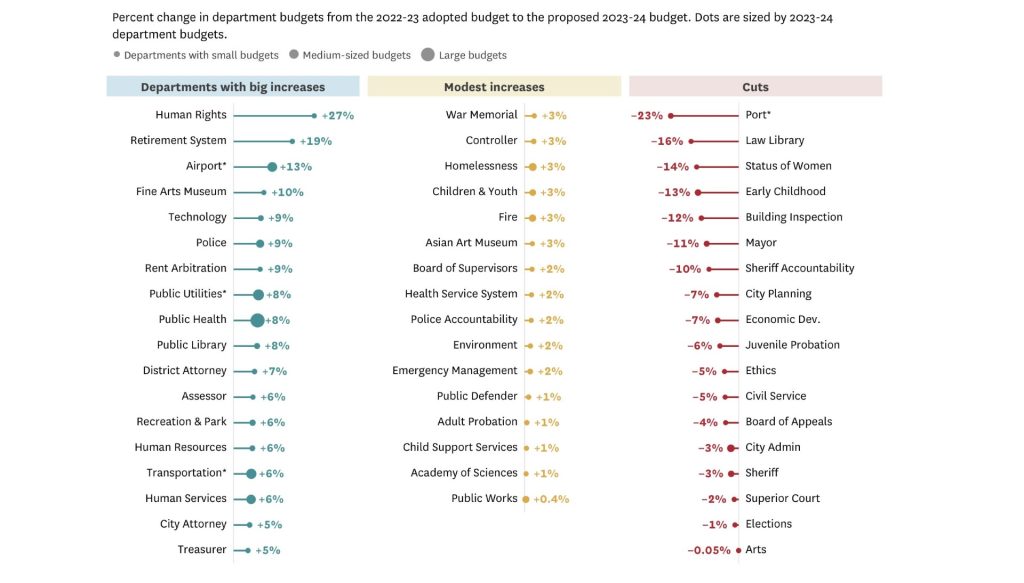
Furthermore, the stark contrast in budgetary allocations, with the Sheriff’s office facing funding cuts while the police and fire departments enjoy increased financial support, has raised questions about the Mayor’s priorities and the equitable distribution of resources. This unbalanced approach to public safety budgeting has not only widened the gap between various law enforcement entities but has also significantly strained the city’s resources, forcing taxpayers to bear the brunt of mounting legal costs and compromised public safety standards.
In light of these challenges, it is imperative for city officials to prioritize the restoration of a balanced and collaborative approach to public safety funding and jail facility management. Addressing the grievances between the Mayor’s office and the Sheriff’s office, along with a comprehensive overhaul of budget allocations, is crucial to ensuring the effective functioning of the jail system and the overall well-being of all residents in San Francisco. Only through a concerted effort to bridge the gap and foster a unified approach to public safety can the city begin to mitigate the financial strain and uphold the rights and dignity of its residents.
San Francisco’s criminal justice system is grappling with a multifaceted crisis, characterized by a significant imbalance in resource allocation, challenges in monitoring pretrial diversion and electronic monitoring, and the persistent issue of outstanding warrants. A critical element that exacerbates this problem is the Mayor’s apparent failure to adequately fund the Sheriff’s Office, which is tasked with managing these critical aspects of the criminal justice system. This article delves deeper into these issues, highlighting the impacts of inadequate funding on the functioning of the system.
A Strain on Sheriff’s Office Resources
San Francisco’s Sheriff’s Office plays a pivotal role in overseeing pretrial diversion programs, electronic monitoring, and the apprehension of individuals with outstanding warrants. However, the Sheriff’s Office has been grappling with resource shortages that severely hamper its effectiveness.
Electronic Monitoring Oversight
Perhaps one of the most glaring issues is the overwhelming caseload faced by a mere one to two deputy sheriffs per shift responsible for monitoring 500 individuals on electronic ankle monitoring. This stark imbalance between the number of offenders and the personnel assigned to oversee them has several consequences:
Inadequate supervision: The limited number of personnel makes it exceedingly difficult to ensure effective supervision and compliance with the terms of electronic monitoring. This raises concerns about the potential for offenders to exploit these conditions or reoffend without proper oversight.
Rehabilitation and reintegration: The objective of electronic monitoring programs, which is to support rehabilitation and successful reintegration into society, becomes questionable when the sheer caseload makes individualized attention and support nearly impossible.
The Overburdened Warrants Service Unit
The Warrants Service Unit, tasked with actively seeking out and apprehending individuals with outstanding warrants, operates with just five deputies. The implications of this understaffing are far-reaching:
Limited apprehension capacity: With a minimal workforce, the unit struggles to locate and arrest individuals with outstanding warrants in a timely manner. This undermines the credibility and effectiveness of the criminal justice system.
Accumulating warrants: The challenges faced by the Warrants Service Unit contribute to the mounting number of outstanding warrants, leaving many individuals unaccounted for and the public at risk.
Mayor’s Failure to Fund
It is imperative to address the core issue: the Mayor’s apparent failure to allocate adequate funding to the Sheriff’s Office. This funding deficiency exacerbates the problems within the criminal justice system, resulting in an imbalanced workload for deputies, an ever-increasing number of outstanding warrants, and the erosion of public trust.
The implications of this funding shortfall are clear:
Reduced public safety: Inadequate funding of the Sheriff’s Office directly impacts the safety of San Francisco’s residents. Insufficient resources hinder the effective supervision and apprehension of offenders.
Strain on law enforcement: Deputies are faced with insurmountable caseloads, making it nearly impossible for them to fulfill their responsibilities effectively. This, in turn, affects the quality of rehabilitation programs and the timely apprehension of individuals with outstanding warrants.
San Francisco’s criminal justice system grapples with severe challenges, primarily due to the lack of funding for the Sheriff’s Office. The Mayor’s failure to address this issue has far-reaching consequences, leading to imbalanced workloads, a growing number of outstanding warrants, and a loss of public trust. Addressing this problem requires a fundamental reevaluation of resource allocation and a commitment to bolstering the Sheriff’s Office’s capabilities. It is crucial to bridge this funding gap to ensure that the criminal justice system can meet its core objectives while safeguarding the interests of the community.
Amidst the ongoing heatwave in San Francisco and the glaring issue of inadequate cooling in the Downtown Jail, there are pressing questions about Mayor London Breed’s commitment to the well-being of inmates. Additionally, her consistent focus on cutting the budget and staff of the San Francisco Sheriff’s Department raises serious concerns about the impact on jail conditions and the rights of those incarcerated. This article delves deeper into these issues to understand how Mayor Breed’s defunding of the sheriff’s department directly affects the incarcerated people.
Mayor Breed’s Budget Cuts and Inmate Conditions
One cannot ignore the persistent pattern of budget cuts to the San Francisco Sheriff’s Department during Mayor Breed’s tenure. These cuts directly affect the resources available to ensure humane and safe conditions for inmates, particularly during extreme weather conditions like the current heatwave.
Incarcerated Individuals Left Vulnerable
As Mayor Breed continues to trim the budget and staff of the Sheriff’s Department, it is the incarcerated individuals who are left vulnerable to the consequences of these decisions. Inadequate cooling measures in the jail housing units, coupled with reduced staffing levels, create an environment where the well-being of those in custody is at risk.
Deputy Sheriffs: A Beacon of Compassion Amidst Budget Cuts
In the midst of these challenges, Deputy Sheriffs, the dedicated men and women tasked with ensuring the safety and security of inmates, have stepped up to address the immediate needs of those in custody. Reports have surfaced that Deputy Sheriffs have been bringing in multiple fans to help alleviate the oppressive heat inside the jail housing units. This act of compassion and dedication to the well-being of incarcerated individuals is commendable and serves as a stark contrast to the budgetary decisions at play.
A Call for Balance and Prioritizing Inmate Well-Being
While fiscal responsibility is a valid concern, it is crucial to recognize the direct impact of budget cuts on the living conditions and safety of those incarcerated. Mayor Breed’s defunding of the Sheriff’s Department should not come at the expense of the well-being and rights of incarcerated individuals.
In conclusion, the conditions of the San Francisco Downtown Jail during the heatwave highlight critical concerns about Mayor Breed’s approach and the impact of her budgetary decisions on the incarcerated people. It is essential for the community to engage in a thoughtful and informed dialogue on these matters to ensure that the rights and dignity of all individuals, regardless of their circumstances, are respected and protected. Deputy Sheriffs’ acts of kindness underscore the importance of prioritizing the well-being of those in custody, especially in the face of budgetary constraints that directly affect their conditions.
In the heart of San Francisco’s ever-shifting political landscape, a storm of controversy is brewing. The San Francisco Sheriff’s Office is facing a stark and troubling reality – a calculated series of budget cuts and policy shifts that paint a disturbing picture of Mayor London Breed’s unwavering campaign to defund law enforcement in the city. In this article, we’ll meticulously dissect the timeline of events that make a compelling and nuanced case for the Mayor’s relentless assault on the city’s law enforcement agencies.
A History of Radical Reform
Mayor London Breed’s political journey began as a member of the Board of Supervisors, and from the very beginning, she made it clear that she was on a mission to overhaul what she perceived as a deeply flawed criminal justice system. Her 2015 statement sent shockwaves through the city, as she passionately declared her intent to “tear down the system of mass incarceration.” This declaration was not a mere political posture; it was deeply personal, rooted in her familial ties to individuals behind bars.
San Francisco’s Unique Approach Scrutinized
San Francisco has long prided itself on its progressive approach to criminal justice, prioritizing rehabilitation over incarceration. The city’s history has been punctuated by numerous chances given to offenders, emphasizing diversion programs and alternatives to conventional incarceration. However, this progressive leniency took an unprecedented turn when the city began diverting criminals away from traditional imprisonment. This drastic shift triggered widespread public outrage, driven by the brazen open-air drug dealing and an alarming surge in drug overdose deaths.
Mayor Breed’s Inconsistent Stance
Amid mounting public pressure, Mayor Breed reluctantly increased the presence of law enforcement on the city’s streets. However, her efforts appeared lukewarm at best, and the city continued to prioritize rehabilitation over punitive measures. This approach left San Francisco with a troubling reputation – a city that wields the carrot without ever brandishing the stick. While the jail population did see a marginal increase from its lowest point two months prior, street-level crime continued unabated, further casting doubts on the city’s commitment to public safety.
The Mayor’s Bold 2020 Pro-Defunding Declaration
In 2020, Mayor Breed publicly embraced the nationwide call to defund the police, aligning herself with a movement that sought to reallocate funds away from law enforcement. This audacious proclamation heralded a seismic shift in the city’s approach to public safety and hinted at her intentions to fundamentally reshape the foundations of law enforcement in San Francisco.
Mixed Signals in 2022
However, as the year 2022 dawned, Mayor Breed deftly pivoted her public messaging to appear more pro-public safety, even as her actions told a different story. She imposed a nine-month freeze on deputy sheriff and police hiring, a decision that severely impacted staffing numbers, rendering the city more vulnerable to crime.
Budgetary Maneuvers Speak Volumes
Budget allocations often serve as a clear reflection of a leader’s priorities. In February 2021, as part of the budget process, Mayor Breed orchestrated a staggering redirection of $120 million from law enforcement to investments in the African American community. This financial maneuver underscored her commitment to resource reallocation.
In 2023, Mayor Breed’s office continued to raise eyebrows with significant slowdowns in the hiring process, a subtle but potent form of budget reduction. In April of the same year, she denied a longevity incentive designed to retain deputy sheriffs, despite a glaring shortage in the ranks. In July, she initially proposed a 5% budget cut to the Sheriff’s Office but ultimately executed a 2.5% reduction. And in September, it came to light that funding for crucial law enforcement tools like body cameras, tasers, and ammunition had been mercilessly slashed.
The Sheriff’s Office’s Apprehensive Response
In the face of relentless budget cuts and policy shifts, the San Francisco Sheriff’s Office finds itself not only stunned but deeply concerned, particularly in the context of soaring crime rates plaguing the city. It appears that Mayor Breed’s actions are inextricably linked to her personal commitment to criminal justice reform, resulting in a reduction in law enforcement officers and an aggressive push for the civilianization of the police.
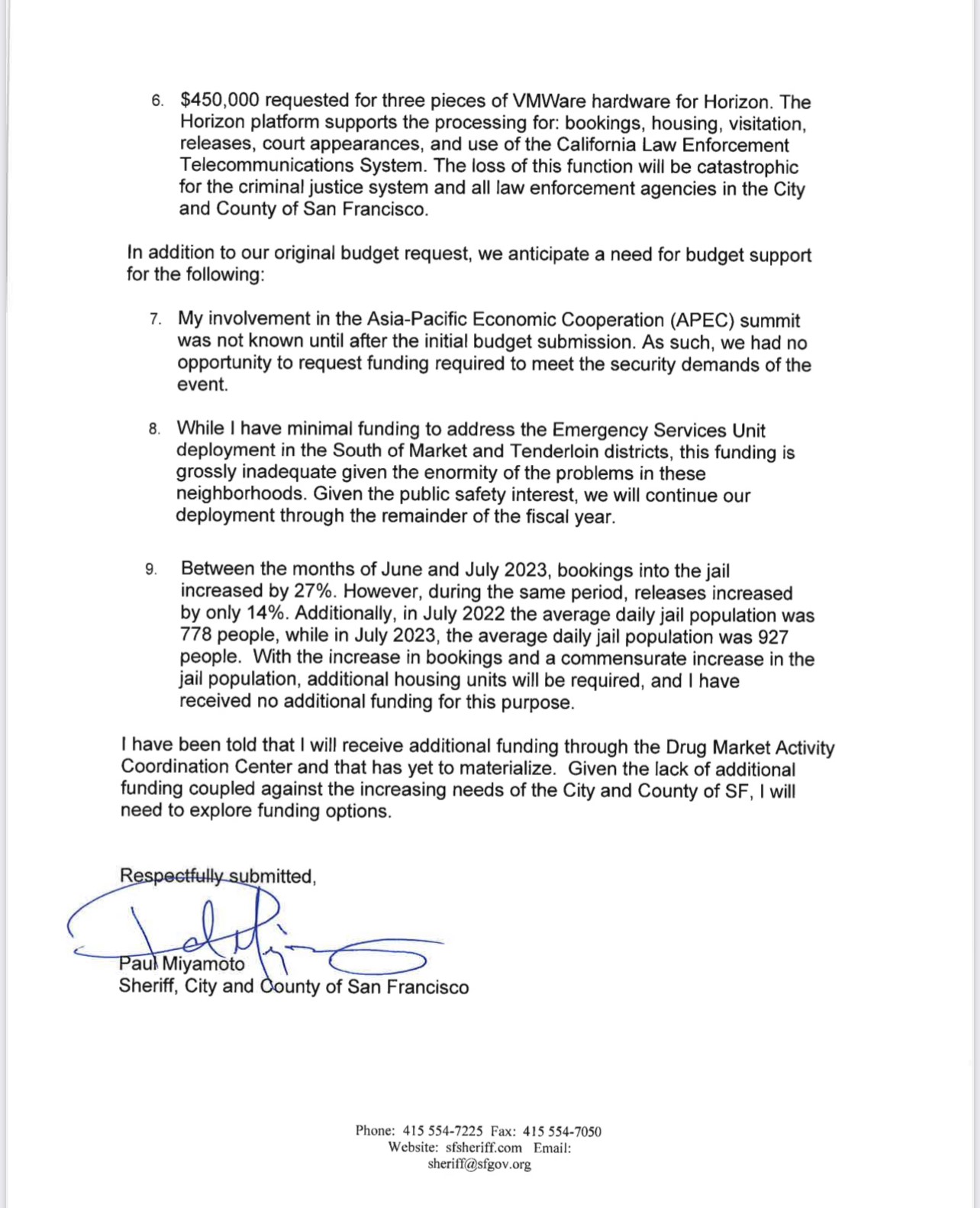
SF Sheriff Requesting Funding After Cuts by Mayor London Breed, pg 1
SF Sheriff Requesting Funding After Cuts by Mayor London Breed, pg 2
The Civilianization of Law Enforcement: Aligning with the Extreme Left’s Agenda
One prominent shift that has sent shockwaves through the San Francisco law enforcement landscape is the introduction of street crisis teams composed of Urban Alchemy workers, who now act as first responders in select situations. This marked transition towards civilianization of certain aspects of law enforcement has not only raised eyebrows but also drawn attention to its alignment with the extreme left’s agenda for criminal justice reform.
It is no secret that progressive elements on the political spectrum have long advocated for the civilianization of law enforcement, viewing traditional policing as inherently flawed and overly punitive. San Francisco’s embrace of this approach reflects a broader ideological shift, where the emphasis on community-based solutions and de-escalation tactics takes precedence over traditional law enforcement methods.
However, all one has to do is look around San Francisco to see that this approach is not working. The city’s streets are marred by open-air drug dealing, rampant crime, and a palpable sense of insecurity among its residents. Critics argue that while civilianization may have noble intentions, it has resulted in a system ill-equipped to address the complex and persistent challenges of urban safety.
While proponents argue that civilianizing law enforcement can lead to more empathetic and community-oriented policing, critics express concerns about the potential ramifications on public safety and law enforcement effectiveness. The debate over the civilianization of law enforcement is emblematic of the larger struggle between reformist ideologies and the need for maintaining public safety—a battle that is currently playing out in San Francisco’s streets and city halls.
Conclusion: A Critical Crossroads
The mounting evidence leaves little room for doubt – Mayor London Breed’s relentless assault on the San Francisco Sheriff’s Office is not just a byproduct of her commitment to criminal justice reform; it’s a calculated and multifaceted agenda. As the city grapples with these complex issues, the delicate balance between reform and public safety teeters on a precipice. The choices made in the coming months will undoubtedly have profound and lasting consequences for the city and its residents, defining the future of criminal justice in San Francisco.
“Paid for by the San Francisco Deputy Sheriffs’ Association PAC. Not authorized by a candidate or committee controlled by a candidate. Financial disclosures are available at sfethics.org.”