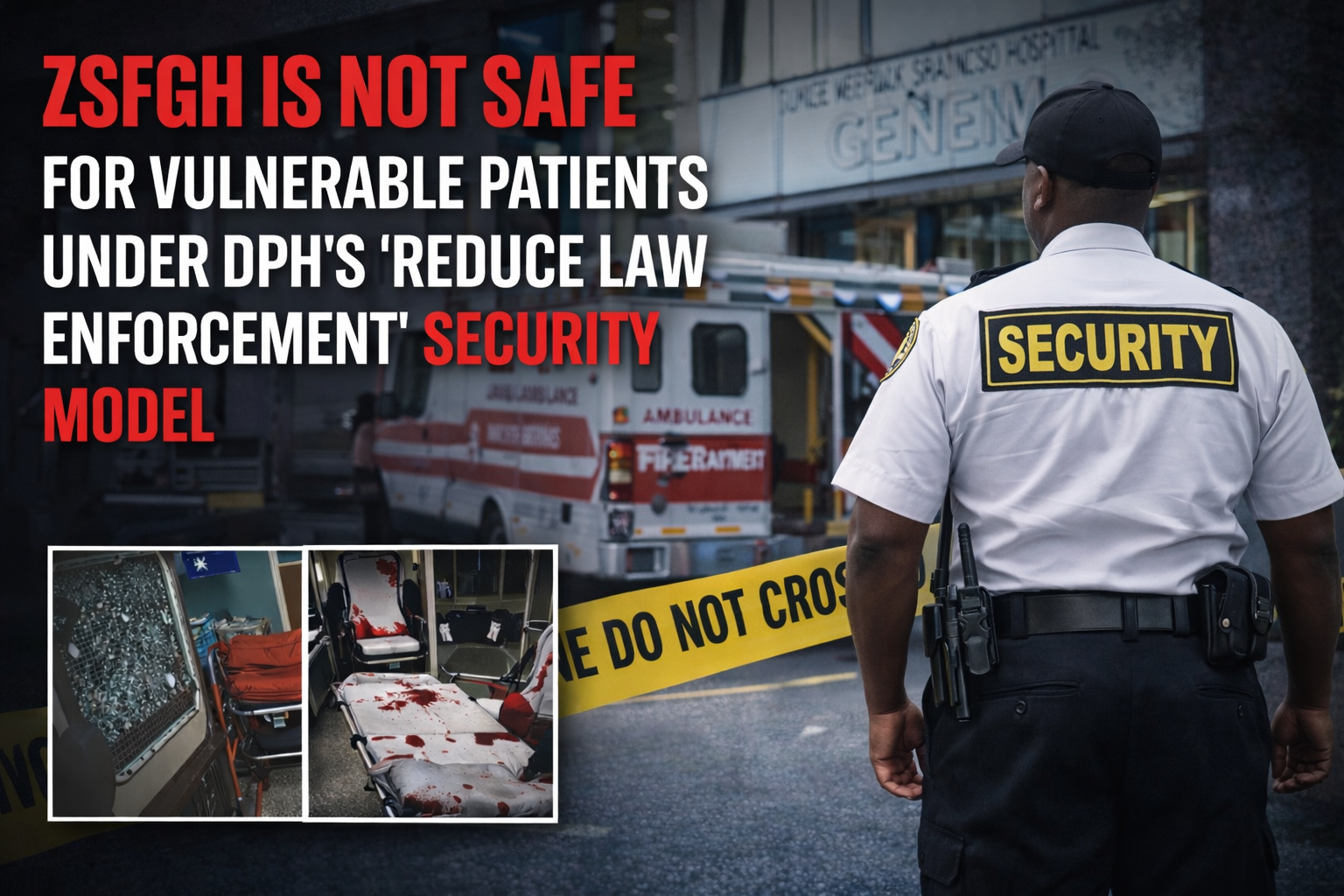
ZSFGH Is Not Safe for Vulnerable Patients: Documented Safety Failures Affect Staff, Patients, and Visitors — and DPH’s Security Model Is Failing

Zuckerberg San Francisco General Hospital (ZSFGH) is a city within a city—a dense, vertical campus with constant foot traffic, high-acuity medicine, psychiatric emergencies, and complex social-service needs moving through the same corridors. Vulnerable inpatients can’t “opt out” of that environment. They can’t leave when violence erupts. They depend on the hospital’s security posture to be strong, visible, and fast.

ZSFGH has documented safety failures affecting staff, patients, and visitors—and the public record shows those failures are not hypothetical.


ZSFGH is a high-risk campus, not an outpatient clinic

ZSFGH is San Francisco’s only Level-1 Trauma Center and a major hub for psychiatric emergency care and high-risk patient volume. That reality alone demands a district-style security posture—the kind you would expect for a downtown transit node, a courthouse complex, or a busy police district footprint.


DPH’s own planning direction: reduce sworn presence, measure “success” by avoiding law enforcement

DPH’s security planning materials have repeatedly centered a policy goal of reducing the presence of law enforcement, and DPH has emphasized metrics framed around completing Behavioral Emergency Response Team (BERT) interventions without law enforcement present. SF Media

DPH’s own Environment of Care reporting also describes BERT as part of a broader strategy to reduce reliance on law enforcement—explicitly listing measures of “success” such as reducing law-enforcement interventions and “replacing” deputy positions with DPH security roles.

BERT may help in some situations. But a hospital campus does not become “safe” because sworn staff were avoided. It becomes safe when violence is prevented, contained quickly, deterred, and when vulnerable people are protected in real time.


The December 2025 Ward 86 killing: the public timeline shows warning signs — and the system still failed

In December 2025, a social worker at Ward 86 was fatally stabbed inside ZSFGH. Reporting after the killing describes long-standing safety concerns, prior warnings, and a security posture that did not stop a determined attacker. San Francisco Chronicle

Mission Local’s reported timeline (source: Mission Local)

Mission Local reported that the alleged attacker had been reported to security for abusive behavior and threats toward a doctor about two weeks before the attack, that there were plans to ban him, and that staff had tried to contact him leading up to the incident. (Mission Local also reports eyewitness accounts disputing the “within seconds” narrative and describes delays and gaps in control of access and response.)

That matters because it goes directly to a second issue:


DPH’s own Violence Risk Notification Policy: if a high-risk threat is identified, law enforcement notification is required

DPH’s Violence Risk Notification Policy contemplates situations where a threat is assessed and escalated, and it includes explicit notification requirements that involve law enforcement. The policy’s notification flow requires SFSO notification and indicates SFPD notification as part of the process when certain thresholds are met. 

If DPH leadership had credible notice of a specific, escalating, high-risk threat (as Mission Local reports), then the core question becomes unavoidable:

Did DPH follow its own violence-risk notification policy—early, formally, and fully—so that sworn resources could be deployed in a preventive posture (not merely reactionary)?

When a system trains itself—by policy design, incentives, and staffing—to treat sworn presence as something to be minimized, deputies risk being pushed into a reactionary role, and then blamed when the underlying security posture fails.


ZSFGH’s own security reporting shows serious crime and safety volume

DPH/SFHN security reporting for ZSFGH documents significant incident volume across categories that directly affect staff, patients, and visitors. In the FY 2023–2024 security annual report, ZSFGH reported hundreds of “crimes against persons,” along with property crimes and other categories (including increases compared to prior years in multiple areas).

This is not an abstract debate about ideology. It’s measurable security workload on a high-risk campus.


Documented theft, privacy loss, and property vulnerability — not just violence

Safety is not only stabbings. It’s also the predictable results of weak deterrence and insufficient patrol coverage in a “city-within-a-city” environment:

  • Attempted theft of emergency equipment from an ambulance at ZSFGH in September 2024 resulted in a paramedic injury during the incident. San Francisco Chronicle+1

  • A missing patient logbook containing sensitive information triggered security and policy review reporting in April 2024. SFist

And as our current article correctly emphasizes: we haven’t even fully touched the broader theft exposure—including the vulnerability of hospital-owned property, supplies, and equipment, and the diversion risk that grows when visible deterrence and real patrol saturation are reduced.


What a working, realistic fix looks like (short and operational — not a “theory document”)

ZSFGH needs district-style coverage that matches the threat environment, not a model optimized around avoiding sworn presence:

  1. Uniformed deputy foot patrols across corridors, stairwells, entrances, elevators, and transition points (deterrence + rapid response).

  2. Plainclothes deputies on campus in addition to assigned posts, focused on:

    1. catching theft and criminal activity without telegraphing presence, and

    2. co-responding with BERT when appropriate—while preserving immediate peace-officer capability when violence erupts.

  3. A posture that treats sworn staffing as preventive protection for staff, patients, and visitors—not a last-second backstop.


Bottom line

The public record now includes a fatal stabbing inside ZSFGH, documented concerns about long-running safety failures, and ongoing theft/property vulnerabilities. San Francisco Chronicle+2San Francisco Chronicle+2 Meanwhile, DPH’s own planning materials and internal reporting show a model and culture shift aimed at reducing law-enforcement presence and measuring “success” by minimizing law-enforcement involvement. SF Media

ZSFGH is not safe for vulnerable patients under the current posture—nor is it reliably safe for staff and visitors. The standard must be real protection and real outcomes—not metrics that celebrate how often deputies were avoided.

ZSFGH Is Not Safe for Vulnerable Patients: Documented Attacks and Thefts Show DPH’s Security Model Is Failing

Zuckerberg San Francisco General Hospital (ZSFGH) is a city within a city—a dense, vertical campus with constant foot traffic, high-acuity medicine, psychiatric emergencies, and complex social-service needs moving through the same corridors. Vulnerable inpatients can’t “opt out” of that environment. They can’t leave when violence erupts. They depend on the hospital’s security posture to be strong, visible, and fast.

ZSFGH carries an extreme ER burden and high-risk volume

Public reporting citing California health data has highlighted ZSFGH as one of the hospitals with a very high share of homeless ER patients (22% in 2023), and notes heavy recidivism in SF ER usage.

Whatever the exact percentages year to year, the operational reality is the same: ZSFGH is an intense, high-risk campus—not an outpatient clinic.

DPH’s own documents show the policy direction: “reduce law enforcement presence”

DPH materials presented to the Health Commission frame the security strategy around “prevention/equity” and reducing the presence of law enforcement.

DPH also reports performance using metrics like how often BERT interventions are completed without law enforcement present (e.g., 87% cited in staffing materials). 

BERT may help in some situations—but a hospital campus doesn’t become “safe” because law enforcement was avoided. It becomes safe when violence is prevented, contained quickly, and deterred.

Weapons are a daily reality, not a talking point

ZSFGH security reporting documents thousands of weapons/contraband confiscations through screening:

  • 3,394 in FY 2020–2021 

  • Nearly 4,000 in FY 2023–2024 

That is exactly why minimizing sworn presence as a goal is backwards on this campus.


Documented attacks, thefts, and injuries reported in the news

These aren’t hypotheticals. Recent public reporting includes:

  1. Fatal stabbing of a social worker inside ZSFGH (Ward 86) — December 2025
    A UCSF social worker was attacked and repeatedly stabbed inside the hospital; charges were later upgraded after the victim died. ABC News+2San Francisco Chronicle+2
    This incident has triggered major public scrutiny of ZSFGH safety conditions and security posture. San Francisco Chronicle+1

  2. Ambulance smash-and-grab / attempted theft of emergency equipment — paramedic injured — September 28, 2024 (ZSFGH campus)
    Police and news outlets reported an ambulance was broken into and equipment stolen; a paramedic was injured during the incident. NBC Bay Area+1

  3. Security failure involving missing patient logbook with sensitive information — April 2024
    News reports said a patient logbook containing personal/medical information went missing, prompting a security/policy review. CBS News+1

  4. High volume of reported workplace-violence incidents and regulatory scrutiny (context emphasized in reporting after the fatal stabbing)
    Major reporting after the December 2025 killing describes long-running safety concerns, workplace-violence incident volumes, and prior enforcement actions and warnings. San Francisco Chronicle

Bottom line: the public record shows violence and theft-type incidents are occurring at or tied to the ZSFGH campus and operations—and they’re not isolated “one-offs.”


It’s also a theft and property-loss vulnerability—and the risk is structural

DPH’s own security scope includes protecting equipment, supplies, and medications and investigating theft.

When visible deterrence and patrol coverage are reduced in a “city within a city,” the predictable result is more opportunity: theft, diversion risk, property damage, and repeat offenders who learn the gaps.


A working fix (short, operational, and realistic)

ZSFGH needs district-style coverage that matches the threat environment:

  1. Assigned posts in predictable high-risk locations.

  2. Uniformed deputy foot patrols across corridors, stairwells, entrances, and transition points.

  3. Plainclothes deputies on campus (in addition to posts and beats):

    1. to catch theft/crime without telegraphing presence, and
    2. to co-respond with BERT when appropriate—while preserving immediate peace-officer capability when violence erupts.

Bottom line

DPH’s own documents show a model optimized to reduce law enforcement presence, while ZSFGH’s own reporting shows weapons are constantly intercepted—and the news record now includes fatal violence, injuries, and theft incidents tied to the campus. San Francisco Chronicle+2NBC Bay Area+2

ZSFGH is not safe for vulnerable patients under the current posture. The standard must be real protection and real outcomes—not metrics that celebrate how often deputies were avoided.

Deputy’s Rapid Response at ZSFGH Likely Prevented Mass Casualty Stabbing — But Security Plan Still Keeps Deputies Out of Most Crises

FOR IMMEDIATE RELEASE

Deputy’s Rapid Response at ZSFGH Likely Prevented Mass Casualty Stabbing — But Security Plan Still Keeps Deputies Out of Most Crises

Deputy Sheriffs say DPH’s BERT model minimizes law-enforcement presence and relies on unarmed security in a vertical city of high-risk patients
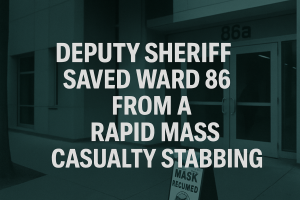
Deputy Saves ZSFGH Ward 86 from Mass StabbingSan Francisco, CA — The San Francisco Deputy Sheriffs’ Association (SFDSA) is calling attention to the heroic actions of a Sheriff’s deputy at Zuckerberg San Francisco General Hospital (ZSFGH) and renewing its warning that the hospital’s current security model is designed to keep deputies out of most violent incidents while relying on unarmed security and clinical teams.

On December 4, 2025, a stabbing in Ward 86, ZSFGH’s HIV clinic, left UCSF social worker Alberto Rangel with multiple stab wounds. Despite rapid intervention and lifesaving efforts, Mr. Rangel later died from his injuries.

SFDSA President Ken Lomba says that while the deputy could not undo the initial wounds, his rapid intervention almost certainly prevented additional victims.

“What people aren’t being told is that our deputy didn’t just confront one dangerous situation — he likely prevented a mass-casualty stabbing inside that clinic,” Lomba said. “Ward 86 is a high-volume HIV clinic. If the assailant had been able to move freely down the hallway, we could be talking about multiple staff and patients stabbed. The only reason that didn’t happen is because a deputy was close enough to intervene within seconds.”


Unarmed security at the entrance, no fixed deputy post in the 80/90 complex

Under ZSFGH’s current security model, Building 80 – which houses the Ward 86 HIV clinic on the 6th floor – is part of the connected 80/90 complex, with its main public entrance on 22nd Street. According to our union members assigned to ZSFGH, that entrance is staffed by an unarmed private security guard seated at a desk, and DPH relies on additional private security guards who patrol the building’s interior. There is no fixed Sheriff’s deputy post in Building 80.

SFDSA later discovered, through its staffing records, that Building 80 previously had a Sheriff’s cadet post, but DPH eliminated that post in July 2025, leaving only unarmed private security at the public entrance and in the hallways.

In the connected Building 90, ZSFGH operates Ward 93, an Opiate Treatment Outpatient Program (OTOP) methadone clinic on the third floor. Public information lists Ward 93 as a methadone clinic serving adults with substance-use disorders, and our union members report that DPH assigns a private armed security guard inside Unit 93 who is not permitted to leave that unit. That means the one armed security presence in the 80/90 complex is effectively locked to a single clinic, while the rest of the building — including the path to Ward 86 — is covered only by unarmed guards and a greatly reduced number of deputies.

On December 4, a stabbing occurred in the 6th-floor Ward 86 hallway, where UCSF social worker Alberto Rangel was repeatedly stabbed and left in critical condition. An individual was later arrested on suspicion of carrying out the stabbing. Based on information from our members, the individual possibly moved past the unarmed security presence at the 22nd Street entrance and through the 80/90 complex to reach the 6th floor.

The only sworn law-enforcement officer in Building 80 at that time was a Sheriff’s deputy temporarily assigned there solely because DPH had requested protection for a doctor who had previously reported threats from the same individual. When the stabbing began in another area in a hallway, that deputy responded, intervened to stop the attack, helped secure the individual, and allowed medical staff to begin lifesaving care.

“This was not a building with a strong law-enforcement presence,” Lomba said. “It was an unarmed guard at the lobby desk, a handful of roving security guards, no fixed deputy post, and a deputy in Ward 86 only because a doctor had already been threatened. In the end, the only person who physically restrained the suspect and stopped the stabbing was a sworn deputy sheriff.”


A missed opportunity at City Clinic and delayed law-enforcement notification

San Francisco City Clinic, located at 356 7th Street in SoMa, is a DPH sexual-health clinic that does not have any assigned Sheriff’s deputy post. According to public news reports, on the same day as the Ward 86 killing, hours before the stabbing, the same individual went to City Clinic looking for a specific doctor he had been threatening. A clinic director hid the doctor, told the individual the doctor was not there, and then heard the individual say he would go to Ward 86 at ZSFGH to find that doctor later that day. The clinic and the hospital are roughly two miles apart, yet there is no public indication in those reports that either SFPD or the Sheriff’s Office was contacted at that point so law enforcement could attempt to locate or intercept the individual before he reached Ward 86.

Under DPH’s own Threat Management policy, multiple threats combined with a stated plan to go to a specific location to find a targeted provider appear to meet the definition of a “High Risk” case—the very category where the policy warns of imminent danger of serious injury or death and directs staff to notify both SFSD and SFPD. SFDSA is therefore asking DPH to explain why law enforcement was not called from City Clinic when staff had both credible threats and advance notice of the individual’s stated destination, and why the Sheriff’s Office was only brought in shortly before the attack instead of at the earliest warning.


Unanswered questions about DPH’s own threat policy

Through a public-records request under the California Public Records Act (CPRA), SFDSA’s counsel obtained DPH’s Threat Management flowchart, which outlines how threats are supposed to be classified and handled. According to that document, cases are classified as “High Risk” when there are multiple threats of violence and evidence of a violent plan directed at a specific person or location. In those situations, the policy says there is a high probability of imminent danger of injury or death, and the response should include contacting both the Sheriff’s Office and SFPD.

Public news reports about this case describe an individual who threatened staff over a period of time, went to San Francisco City Clinic looking for a specific doctor, told the clinic director he would go to Ward 86 at ZSFGH to find that doctor, and then later allegedly carried out a stabbing in Ward 86. Taken together, those facts appear to fit the very “High Risk” scenario DPH’s own Threat Management policy describes: multiple threats combined with a clear plan to seek out a targeted provider at a specific location.

DPH’s Threat Management flowchart, as produced to SFDSA, states that when a situation is classified as “High Risk,” both the Sheriff’s Office and SFPD should be notified. In this case, a doctor at Ward 86 had already reported threats from the same individual, and DPH specifically requested that a Sheriff’s deputy be assigned to protect that doctor on the day of the stabbing.

SFDSA is calling on DPH and its security leadership to answer two basic questions:

  1. How was this case formally classified under DPH’s Threat Management policy — Low, Medium, or High Risk?

  2. If it was treated as High Risk, were both SFSD and SFPD notified in accordance with that policy — and if not, why not?

“DPH’s own document, which we obtained through a CPRA request, says multiple threats plus a violent plan aimed at a specific person equals High Risk and should trigger calls to both the Sheriff’s Office and SFPD,” Lomba said. “The publicly reported facts about this case look exactly like that scenario. The public deserves a clear answer: did DPH follow its own High-Risk protocol before this attack — yes or no?


A security model built to keep deputies out of the room

SFDSA says the tragedy in Ward 86 must be understood in the context of a security plan that intentionally reduced sworn staffing and routed most crises away from law enforcement.

In a series of plans and presentations to the Health Commission, the Department of Public Health (DPH):

  • Proposed cutting 11.4 deputy positions at ZSFGH, reducing deputies on the hospital work order from 30 FTE to 21 FTE.

  • Created a Behavioral Emergency Response Team (BERT) made up of psychiatric nurses and psych techs to respond to behavioral crises, perform de-escalation, administer medications, and manage restraints.

  • Chose to support BERT with non-uniformed cadets and private security personnel, rather than strengthening sworn coverage on high-risk units.

  • Reported that in the Emergency Department and other areas, over 80 percent of BERT activations now occur without any law-enforcement presence, and cited that as a success metric.

  • Stated that law-enforcement intervention could “have the unintended effect of escalating a situation” and described reducing the presence of deputies in DPH facilities as an explicit goal.

“DPH didn’t just trim numbers; they rewrote the model so that deputies are kept out of the room as much as possible,” Lomba said. “They built a system where psych staff, cadets, and unarmed guards are expected to handle the early, most dangerous seconds of an attack — and then deputies are supposed to show up later and clean up the aftermath.”


Not just one building — a vertical city of high-risk patients

The Association says this “response-only” approach is especially dangerous at ZSFGH because of how the campus is built and what it handles.

Zuckerberg San Francisco General is not a single hallway with a front desk. It is a dense, multi-building, multi-story campus of high-risk services:

  • San Francisco’s only Level-1 trauma center,

  • The City’s only 24/7 psychiatric emergency department, and

  • The primary safety-net hospital for many of the City’s most vulnerable residents, including people experiencing homelessness, serious mental illness, and substance-use disorders.

Multiple towers and specialty buildings — trauma and emergency, medical-surgical units, HIV and infectious-disease clinics like Ward 86, psychiatric emergency, acute psych, and high-risk outpatient programs — are stacked on top of one another and connected by elevators, stairwells, internal corridors, and secured passageways.

When a call comes in from an upper floor or a remote clinic, deputies must navigate multiple floors, secured access points, and crowded hallways before reaching the scene.

“On a campus like this, ‘response-only’ isn’t a theory problem; it’s a time-and-distance problem,” Lomba said. “Every minute of delay is more time for a stabbing, strangulation, or assault on staff to continue. When you cut deputies here, you don’t just pull them off one doorway — you thin sworn coverage across an entire vertical grid of trauma units, psych, and clinics all at once.”


Built on narrow statistics and flawed comparisons to LA and Alameda

DPH has repeatedly cited hospitals in Los Angeles County and Alameda County as models for its hybrid BERT and security approach. SFDSA argues those comparisons are fundamentally flawed:

  • LA and Alameda distribute trauma and psychiatric emergencies across multiple hospitals and trauma centers, with sheriff’s deputies and local police departments able to surge to incidents across a wide geographic area.

  • San Francisco concentrates most of that burden on one campus — ZSFGH — for roughly 1.5 million people in San Francisco and northern San Mateo County.

  • In the external systems DPH references, sworn law enforcement remains a core part of a co-responder model. At ZSFGH, the implementation has focused on reducing deputies and measuring success by how often BERT can operate without law enforcement present.

At the same time, DPH built its equity case on a narrow slice of data:

  • Internal memos and public statements highlighted that roughly half of use-of-force incidents in one reporting period involved Black patients, and that a high share of ED use-of-force involved Black patients compared to their percentage of ER visitors.

  • ZSFGH’s own annual reports, however, show that Black patients are about 12–15 percent of the hospital’s overall patient population, not 48–70 percent.

  • DPH has not publicly released the full breakdown of who is in the ED, PES, and psych units by race, or how many of those force incidents involved fights, weapons, or psychiatric restraints.

“DPH took a small number of high-risk incidents and used that percentage to argue deputies themselves were an ‘equity problem,’” Lomba said. “They never showed the full picture of who is in those units, why staff called for help, or how many times deputies prevented serious injury or death. That narrow statistic was then used to sell a plan that civilianized security and kept deputies out of the room.”


What SFDSA is demanding now

In light of the Ward 86 killing and the documented design of the ZSFGH security plan, SFDSA is calling for immediate changes:

  1. Restore and expand assigned deputy-sheriff posts on high-risk units and posts at ZSFGH, including Ward 86, the Emergency Department, Psychiatric Emergency Services, and critical inpatient floors, with a fully staffed sworn patrol presence on campus.

  2. End the experiment of replacing deputies with cadets, private security, and BERT-only responses in areas where staff routinely face weapons, severe psychiatric crises, and violent assaults.

  3. Publish a full, unit-level analysis of use-of-force and patient demographics, so the public can see the true denominators behind DPH’s equity claims, including ED/PES/psych race breakdowns and the reasons staff call for help.

  4. Establish an independent safety and equity review of the ZSFGH security model, including BERT, cadets, private security, and deputy staffing, with full participation from frontline unions representing deputies, nurses, physicians, social workers, and other hospital staff.

  5. Adopt a true co-responder model in which BERT clinicians and deputies respond together to the most dangerous situations, instead of sending clinicians and non-sworn staff in first and treating law enforcement as a last resort.

“The deputy in Ward 86 did everything right and likely prevented more people from being stabbed,” Lomba said. “What failed that day was not the deputy — it was a security plan that deliberately kept most deputies away from high-risk units in the first place. That plan has to change before we lose anyone else.”


Media Contact
San Francisco Deputy Sheriffs’ Association
Phone: (415) 696-2428

Internal DPH Memos Show ZSFGH Security Plan Was Built to Keep Deputies Out

FOR IMMEDIATE RELEASE

Internal DPH Memos Show ZSFGH Security Plan Was Built to Keep Deputies Out

Deputy Sheriffs’ Association says DPH cut sworn staffing, misused equity data, and spent more on an unproven BERT / private-security model before fatal stabbing of UCSF social worker

San Francisco, CA — The San Francisco Deputy Sheriffs’ Association (SFDSA) is releasing internal Department of Public Health (DPH) documents showing that security changes at Zuckerberg San Francisco General Hospital (ZSF GH) were deliberately structured to keep law enforcement out of most patient crises — even as weapons seizures, assaults, and workplace-violence incidents remained high.

On December 4, 2025, a UCSF social worker was fatally stabbed multiple times in Ward 86 at ZSF GH. A nearby deputy intervened, disarmed the attacker, and allowed staff to begin life-saving measures, but the victim later died. SFDSA President Ken Lomba says this tragedy is the predictable outcome of a policy that treated deputies as a problem to be reduced, not a safety partner to be strengthened.

“DPH used the language of ‘equity’ and ‘best practices’ to justify a security experiment that removed deputies from high-risk units and posts and replaced them with BERT clinicians, cadets, and unarmed guards,” said Lomba. “Their own memos brag that almost nine out of ten behavioral emergencies now happen with no law enforcement present. On Ward 86, we saw the real-world result of that decision.”


DPH’s own memos: cut deputies, keep them out of the room

In a June 14, 2021 Safety Services Staffing Plan Proposal, DPH proposed to:

  • Reduce Sheriff’s deputies at ZSF GH by 11.4 positions (about 14.5 FTE including backfill), and
  • Add 31.9 FTE of Psychiatry Nurses and Licensed Psychiatric Technicians, plus 2.5 FTE Care Experience Health Workers, to form a Behavioral Emergency Response Team (BERT).

The same plan specifies that non-uniformed cadets would provide clinical support in patient intervention, function as “healthcare ambassadors,” and conduct campus patrols.

A later August 28, 2023 Security Staffing Plan Update to the Health Commission reports that:

  • The plan would reduce deputies by 11.4 FTE and add 29.4 FTE of BERT staff to create a 24-hour BERT program in the Emergency Department.
  • DPH proposed supporting BERT with non-uniformed cadets trained as “healthcare ambassadors,” not with additional deputies.
  • By early 2023, BERT was fully implemented and, instead of calling law enforcement, staff were calling BERT to thousands more “risk behavior” events than the Sheriff’s Office, with over 80% of BERT activations — and nearly 90% of Emergency Department BERT activations — occurring without any law enforcement present.
  • In July 2023, the 11.4 FTE of deputies was officially removed from the ZSFGH work order, reducing deputies from 30 FTE to 21 FTE.

At the same time, the update memo notes that 46.5 FTE of “healthcare trained private security officers” were installed as hospital ambassadors at ZSFGH campus entry points.

“At the one campus that handles most of San Francisco’s stabbings, shootings, and psychiatric emergencies, DPH chose to send BERT and cadets into the room and push sworn deputies farther away,” Lomba said. “That is not a co-responder model — that’s a model designed to keep law enforcement out of the picture until after violence has already occurred.”


An expensive experiment, not a safety upgrade

DPH has sometimes framed these changes as modernization or rationalization of security. Their own FTE and cost figures tell a different story.

According to DPH’s Safety Services plan and subsequent updates:

  • At ZSFGH, DPH proposed to reduce the Sheriff work order by 11.4 deputy positions (about 14.5 FTE), while adding 31.9 FTE of BERT psych nurses/techs and 2.5 FTE care workers.
  • By August 2023, 29.4 FTE of BERT positions were funded, and 46.5 FTE of contracted “healthcare trained private security officers” were in place at ZSFGH campus entry points.
  • In their own cost comparisons, DPH shows that a small number of deputies and cadets account for several million dollars in annual cost, while dozens of private security officers are added on separate contracts, illustrating that DPH shifted money away from sworn and cadet roles toward a much larger private-security footprint.

At Laguna Honda Hospital, DPH’s example of “efficiency” makes the trade-off clear:

  • 8.4 FTE of deputies cost significantly more than 34.6 FTE of private security officers, who were then used to provide 24-hour monitoring in multiple locations.

Taken together, these documents show that DPH did not simply “save money by replacing deputies.” The department reduced sworn coverage and then layered on:

  • Dozens of BERT clinical positions,
  • Dozens of contracted private security officers, and
  • Cadets or other non-sworn “ambassador”-type roles.

From SFDSA’s perspective, this amounts to an expensive and unproven security experiment: one that trades sworn patrol and rapid response for a more complicated mix of clinical teams and unarmed guards, while leaving fewer deputies immediately available when violence erupts.

The Association is calling on the City to disclose the full annual cost of the BERT-plus-private-security model at ZSFGH and explain why that funding was not instead used to fully staff a sworn patrol division and fixed-post deputies in the highest-risk units and posts at the hospital.


Misusing equity data to justify cutting deputies

DPH also relied on a single statistic to justify reducing deputies: that about 46% of use-of-force incidents against patients in one reporting period involved Black/African American patients.

SFDSA does not dispute that racial disparities are real and serious. However, the way the data are presented raises concerns:

  • The figures in DPH’s materials do not provide the racial breakdown of patients in the specific high-risk areas (ED, PES, inpatient psych) where most force is recorded.
  • The same Safety Services plan acknowledges that deputies assisting with patient restraints and defending staff against attacks drive a large share of force incidents, yet this context is not clearly presented when the “46% Black” figure is cited.

Despite these limitations, DPH used this disparity as one of the key reasons to reduce the Sheriff’s work order and expand BERT and non-sworn roles.

“If DPH truly wants equity, the answer is not to quietly pull deputies out of high-risk units and hope the numbers look better,” Lomba said. “The answer is to be honest about what is driving these incidents and to fix it in partnership with staff, patients, and the communities we serve.”


ZSFGH is not comparable to LA or Alameda

In its own Security Model responses, DPH repeatedly cites Alameda Health System and Los Angeles County hospitals as “comparable” to ZSF GH and as justification for its hybrid BERT / non-sworn model.

SFDSA believes this comparison is misleading:

  1. One overloaded campus vs. multi-hospital systems
    • Alameda and LA counties distribute trauma and psychiatric emergencies across multiple hospitals and trauma centers, with sheriff’s deputies and city police departments available to surge to calls.
    • San Francisco relies on one safety-net campus — ZSFGH — as the City’s only Level-1 trauma center and only 24/7 psychiatric emergency department for roughly 1.5 million people in San Francisco and northern San Mateo County.
  2. Co-responder vs. “keep deputies away”
    • DPH’s own descriptions of Alameda and LA highlight hybrid security models that include healthcare security officers and county sheriff’s deputies as partners.
    • At ZSF GH, by contrast, DPH cut deputies by roughly one-third and used BERT plus cadets and unarmed private security to handle most risk-behavior incidents, with success measured partly by how often law enforcement is not present.
  3. Existing record of violence at ZSF GH
    • ZSFGH’s own annual reports emphasize that healthcare workers are almost four times more likely than workers in most other industries to experience workplace violence and that the hospital has had to invest in BERT and security upgrades to address persistent safety issues.

Not just one building — a vertical city of high-risk patients

Not just one building — a vertical city of high-risk patients
When DPH reduced deputy positions at ZSFGH, they did not simply pull deputies off “one hospital building.” They thinned coverage across what is effectively a vertical city of high-risk patients.

ZSFGH is a dense hilltop campus made up of multiple multi-story towers and specialty buildings — trauma, medical-surgical units, HIV and infectious-disease clinics, psychiatric emergency, acute psych, and high-risk outpatient programs — all stacked on top of each other and connected by elevators, stairwells, skyways, and long interior corridors. Nearly all of San Francisco’s Level-1 trauma care, 24/7 psychiatric emergency, and safety-net inpatient care is concentrated on this single site.

When a call comes in from an upper floor or a remote ward, deputies have to navigate multiple floors, secured access points, and crowded hallways before ever reaching the scene. On a campus like that, “response-only” policing is not a theory problem, it is a time-and-distance problem: every minute of delay is more time for a stabbing, a strangulation, or an assault on staff to continue.

Cutting deputies in that environment does not just mean fewer uniforms in one lobby. It means fewer sworn officers available to cover an entire vertical grid of vulnerable units — from the Emergency Department to Ward 86 to psych and ICU floors — at the same time. That is the reality DPH chose to ignore when it redesigned security around BERT, cadets, and unarmed guards.

“You cannot treat a single, overloaded trauma and psych emergency hospital in San Francisco like just another line on a spreadsheet next to Alameda and LA,” Lomba said. “Those systems built co-responder models with deputies and clinicians together. DPH’s implementation at ZSFGH went in a different direction: fewer deputies, more complexity, and more distance between sworn officers and the highest-risk units.”


What SFDSA is demanding now

In light of the internal memos, equity data, cost figures, and the fatal Ward 86 stabbing, SFDSA is calling for:

  1. Immediate restoration and expansion of assigned deputy-sheriff posts on high-risk units and posts at ZSFGH, including Ward 86, ED, PES, and critical inpatient floors, with a fully staffed sworn patrol presence on campus.
  2. An independent safety and equity audit of ZSFGH’s security model — including BERT, cadets, private security, and deputy staffing — with full participation from frontline unions representing deputies, nurses, physicians, social workers, and other hospital staff.
  3. Transparent incident reporting, including detailed breakdowns of workplace-violence events and use-of-force by unit, incident type (crime-related, psychiatric, medical), clinical factors, and who requested the response, so that decisions are based on full context rather than partial statistics.
  4. A true co-responder model, where BERT clinicians work with trained, equipped deputies on the most dangerous calls, rather than being sent in instead of law enforcement.

“These memos show that the stakes at ZSFGH were always high: concentrated trauma, psychiatric emergencies, and a vulnerable patient population,” Lomba said. “What changed was DPH’s decision to move deputies out of the way and measure success by keeping law enforcement out of the room. After this tragedy, the City cannot pretend that model is working.”


Media Contact
San Francisco Deputy Sheriffs’ Association
Phone: (415) 696-2428

Media Package Link

A Step Forward: Sheriff Moves to Advance Administrative Code Proposal

We’re pleased to report a positive development in our long-standing effort to update San Francisco’s Administrative Code to include clear recognition of the Sheriff’s Office. After months of internal review, the Sheriff’s Department has now taken a significant step forward.

Sheriff Refers Proposal to City Attorney

SF Sheriff Admin Code

On September 24, Undersheriff Katherine Johnson informed us that the department’s legal team has completed its review of our proposed Administrative Code amendment. The Sheriff has now directed that the matter be sent to the Office of the City Attorney for formal drafting of legislative language.

“Once that is completed, someone will follow up with you.”

– Undersheriff Katherine Johnson

We commend the Sheriff’s Office for advancing this process and look forward to the next stage of collaboration.


What This Means

This action brings us closer to correcting a structural oversight: the absence of the Sheriff’s Office in the Administrative Code. Unlike Police and Fire, the operational responsibilities of San Francisco’s elected law enforcement agency are not formally codified in city law.

Our proposal seeks to fix that by defining the functions the Sheriff’s Office already performs under Penal Code § 830.1(a), the San Francisco Charter, and longstanding public safety practice. These include:

  • Jail operations
  • Law enforcement services
  • Court security
  • Emergency and mutual aid response
  • Civil process enforcement
  • Transportation of persons in custody

By placing these responsibilities in the Administrative Code, we strengthen institutional clarity and ensure legal consistency across the City’s public safety departments.


A Shared Path Forward

This step confirms that the Sheriff’s Office recognizes the value of codifying its role — not only for operational stability but for long-term transparency and accountability. We stand ready to assist the City Attorney as they begin crafting legislative language that reflects both the constitutional authority and the day-to-day realities of the Sheriff’s Office.

We believe this shared path will benefit the people of San Francisco and provide a stronger foundation for the professionals who serve under this Office every day.


Message to Our Members

To the members of the SFDSA: your voice, your work, and your service matter. This action is a direct result of continued advocacy and persistence. We believe this change will support your work and reinforce the legal structure behind your service.

To the public: we are committed to ensuring that our city’s elected law enforcement agency receives the same legal foundation as other departments. This is about fairness, function, and future readiness.


What’s Next

We will continue to monitor the drafting process and provide monthly updates to our members and the public as the City Attorney prepares formal language for introduction to the Board of Supervisors.

Our next public update will be issued in October 2025.


Thank you to Sheriff Miyamoto and his team for this important step forward. We look forward to working together in good faith to complete this process.

For questions or feedback, contact us at president@sanfranciscodsa.com

San Francisco Deputy Sheriffs’ Association Stands in Full Support of Mayor Lurie’s Emergency Bill to Combat Fentanyl, Homelessness, and Public Safety Challenges

San Francisco, CA — The San Francisco Deputy Sheriffs’ Association (SFDSA) proudly announces its unwavering support for Mayor Daniel Lurie’s ambitious legislative efforts to address the pressing crises of fentanyl addiction, homelessness, mental health, and public safety in our city. The proposed ordinance represents a bold and necessary step forward, allowing San Francisco to respond to these critical issues with unprecedented speed and efficiency.

The legislation, which accelerates contract approvals, enhances public safety recruitment, and permits private donations to support key initiatives, is a decisive move to overhaul outdated bureaucratic processes and meet the urgent needs of our community.

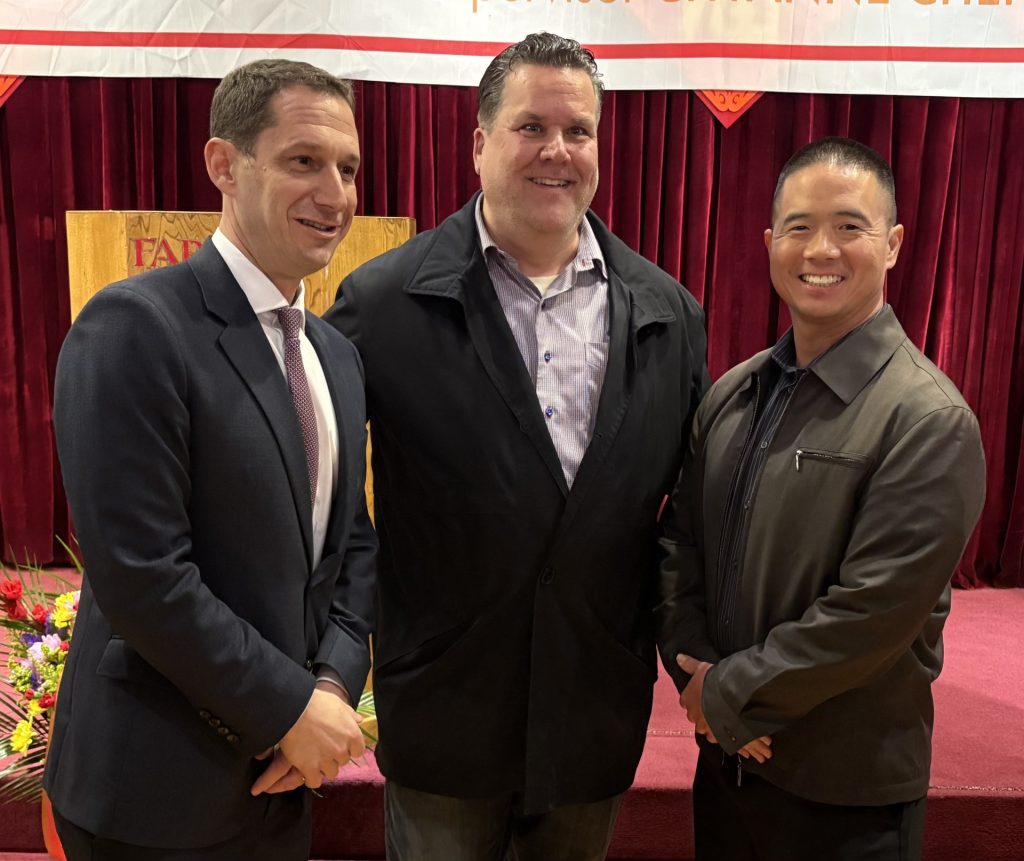
SFDSA Ken Lomba & Mayor Lurie

Ken Lomba, President of the SFDSA, praised Mayor Lurie’s leadership, stating:

“Mayor Lurie’s bold action demonstrates his commitment to putting the safety and well-being of San Franciscans first. This legislation is the swift and decisive response our city needs to address the intersecting crises of public safety, homelessness, and fentanyl addiction. By streamlining processes and empowering leaders to act quickly, we can deliver real results that restore public trust and make San Francisco a safer, healthier place for all. The SFDSA stands fully behind Mayor Lurie and his vision for our city.”

The SF Chronicle recently highlighted the legislation’s key provisions, including:

  • Streamlined Approvals: Department heads can approve contracts, grants, and leases valued between $10 million and $50 million, significantly reducing the typical nine-month timeline for competitive bidding.
  • Public Safety Hiring: Accelerated recruitment and onboarding processes for critical public safety positions, including deputy sheriffs and 911 operators.
  • Private Funding Support: A six-month window allowing the mayor’s office to solicit and accept private donations to address homelessness and behavioral health crises.

The ordinance also requires robust oversight measures, including annual reports to the Board of Supervisors on services delivered, funds raised, and outcomes achieved, ensuring accountability and transparency.

The SFDSA recognizes the gravity of San Francisco’s challenges and applauds Mayor Lurie’s focus on rapid action and results. This legislation offers a path forward to build 1,500 new shelter beds, open 24/7 crisis centers, and address severe public safety staffing shortages.

As an organization dedicated to the safety and security of all San Franciscans, the SFDSA urges the Board of Supervisors to approve this critical legislation without delay. Together, we can take a monumental step toward reclaiming the safety and dignity of our city.

For media inquiries, please contact:
Ken Lomba, President
San Francisco Deputy Sheriffs’ Association
Phone: 415-696-2428

About the SFDSA
The San Francisco Deputy Sheriffs’ Association (SFDSA) represents the dedicated men and women of the San Francisco Sheriff’s Department. Committed to public safety, community engagement, and justice, the SFDSA supports policies and initiatives that improve the well-being of all San Franciscans.

SFDSA’s Relentless Campaign Amplified London Breed’s Failures Like No One Else

The SFDSA ran the most aggressive and far-reaching campaign against London Breed, ensuring her failures dominated the public narrative. While other groups hesitated to directly confront Breed’s record, the SFDSA fearlessly led the charge, making her leadership synonymous with the city’s most pressing crises. With precision, strategy, and bold execution, the SFDSA amplified Breed’s shortcomings to a larger audience than any other organization in the race, setting the tone for the entire mayoral election.

What makes this victory even more significant is that the SFDSA was the only public safety union to endorse Daniel Lurie as a candidate for mayor. This bold and independent move proved pivotal in securing his victory, positioning the SFDSA as a leader in shaping the future of San Francisco.

London Breed's Destruction of San Francisco

Exposing Breed’s Failures and Championing Change

The SFDSA’s campaign focused on holding Breed accountable for six years of ineffectiveness. By emphasizing her mismanagement of critical issues—like the fentanyl crisis, homelessness, and the defunding of law enforcement—the SFDSA became the loudest and most impactful voice in the election.

  • Unmatched Endorsement Strategy: While other public safety unions avoided directly challenging Breed, the SFDSA endorsed Daniel Lurie, a candidate whose platform aligned with our mission to restore public safety and accountability in San Francisco.
  • Dominating the Narrative: Viral nicknames like “Fentanyl Breed,” “Defunder Breed,” and “Homeless Czar Breed” became shorthand for her administration’s incompetence, shaping how San Franciscans viewed her leadership.

This bold decision to endorse Lurie and attack Breed set the SFDSA apart as a driving force for change, influencing public opinion and the course of the election.


Daniel Lurie: The SFDSA’s Vision for Leadership

The SFDSA’s endorsement of Daniel Lurie wasn’t just a political move—it was a commitment to addressing San Francisco’s most pressing challenges. Lurie’s platform focused on:

  • Restoring Public Safety: Increasing staffing for law enforcement and addressing the city’s spiraling crime rates.
  • Fighting the Fentanyl Crisis: Implementing meaningful reforms to curb overdoses and hold drug dealers accountable.
  • Solving Homelessness: Pursuing innovative and effective solutions to get individuals off the streets and into supportive housing.

By endorsing Lurie, the SFDSA sent a clear message: public safety and accountability must be at the heart of San Francisco’s future.


SFDSA’s Multi-Pronged Campaign Strategy

The SFDSA executed a highly focused campaign that leveraged both modern and traditional outreach tools to ensure its message reached San Francisco voters.

Social Media Campaigns with Over 2 Million Views

The SFDSA’s social media campaigns were a game-changer. With over 2 million views, our posts and videos ensured that San Francisco voters repeatedly encountered our messaging in various forms.

  • Targeted Messaging: Ads and videos zeroed in on Breed’s most glaring failures, linking her directly to rising crime, the fentanyl epidemic, and homelessness.
  • Viral Impact: The SFDSA’s online content didn’t just inform—it sparked outrage. Nicknames like “Fentanyl Breed” trended locally, driving conversations across social platforms and further embedding her failures in the public’s mind.

Mailers That Left No Room for Doubt

We sent out approximately 300,000 mailers citywide, detailing Breed’s disastrous record.

  • Farrell-Focused Mailers: Two versions promoted Mark Farrell, emphasizing his strong stance on public safety and fiscal responsibility as a direct contrast to Breed’s weak leadership.
  • Anti-Breed Messaging: The remaining mailers honed in on her failures, ensuring that voters were armed with the facts about her inability to govern effectively.

Online Videos and TV Commercials

The SFDSA didn’t stop at social media. Professionally produced online videos and TV commercials reached voters on multiple platforms.

  • Unflinching Criticism: Videos showcased Breed’s failures in stark detail, leaving no ambiguity about the consequences of her policies.
  • Expanding the Conversation: By reinforcing these messages on television and online, we ensured Breed’s shortcomings were part of every voter’s conversation leading up to Election Day.

Partnering with Breexit.org

Recognizing the need to expand our reach even further, the SFDSA became the largest donor to Richie Greenberg’s Breexit.org, an anti-Breed PAC dedicated to exposing her failures and unseating her.

  • Collaboration for Maximum Impact: While Breexit.org provided an additional platform for anti-Breed messaging, our significant contributions helped amplify their efforts, ensuring the message spread widely.

No other organization matched the SFDSA’s commitment to exposing Breed. Our partnership with Breexit.org further underscored our leadership in the fight to unseat her.


The SFDSA: A Bold Voice for Change

What sets the SFDSA apart is that we stood alone in holding Breed accountable while supporting Daniel Lurie as the candidate to lead San Francisco into a new era.

  • Unique Endorsement: As the only public safety union to endorse Lurie, the SFDSA demonstrated both foresight and commitment to bold, necessary change.
  • Relentless Advocacy: The SFDSA’s campaign was uncompromising in exposing Breed’s failures and elevating Lurie’s vision, providing voters with the truth that no one else was willing to share.

The Result: A New Era for San Francisco

Daniel Lurie’s victory marks a turning point for San Francisco. With Lurie as mayor-elect, the city now has a leader ready to prioritize public safety, tackle the fentanyl epidemic, and implement meaningful solutions to homelessness.

The SFDSA’s campaign was instrumental in this outcome. By exposing Breed’s failures and promoting Daniel Lurie as the city’s best hope, the association not only influenced the election but also demonstrated the power of strategic advocacy in shaping the city’s future.

As San Francisco moves forward, the SFDSA remains committed to working with Lurie to ensure that public safety, accountability, and reform remain top priorities. This campaign wasn’t just about defeating London Breed—it was about setting a new standard for leadership that truly serves the people. And we delivered.

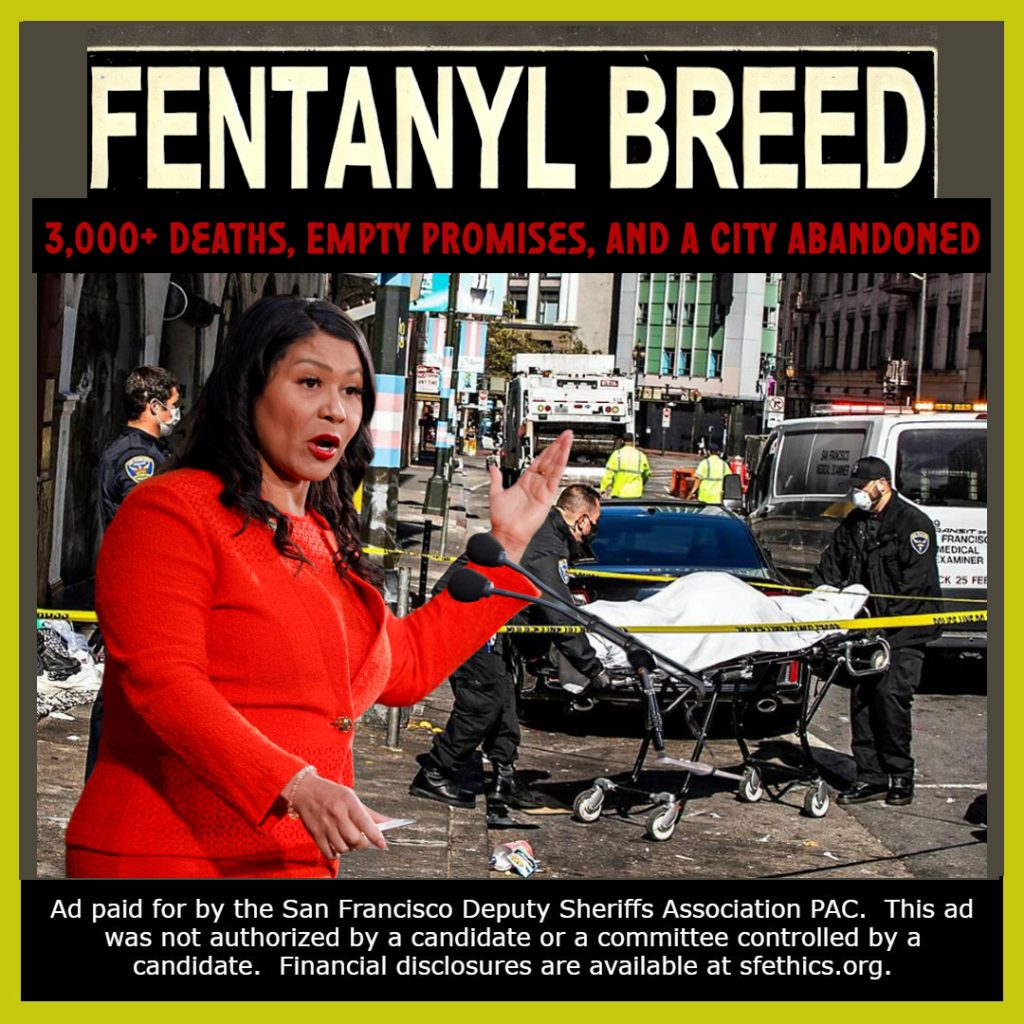
Fentanyl Breed: 3,000+ Deaths, Empty Promises, and a City Abandoned

San Francisco is a city in crisis, and every year, the toll of the fentanyl epidemic grows more devastating. Despite public statements on enforcement and treatment, the reality in San Francisco tells a very different story. The alarming spread of open-air drug use from downtown into neighborhoods like the Mission District reflects a policy approach that isn’t working, leaving our communities, businesses, and city economy to suffer. For three years, the people of San Francisco have watched Mayor London Breed promise change while drug overdoses skyrocket, crime rises, and businesses close their doors.

Fentanyl-Breed

In August 2021, SFDSA President Ken Lomba took this crisis to a national stage during an interview on CNN with Erin Burnett. In a profound statement, Lomba pointed out that while COVID-19 had tragically taken around 130 lives in the city that year, overdose deaths were approaching 700. He questioned why overdose deaths weren’t being treated with the same urgency and called for the city to recognize the fentanyl crisis as an emergency. Lomba’s statement resonated worldwide, drawing praise from leaders across city departments who thanked him for raising the issue. Yet despite this urgent call to action, Mayor Breed has consistently failed to act meaningfully, leaving lives, livelihoods, and the city’s future at risk.


A Crisis Ignored: The Spread of Open-Air Drug Use Across San Francisco

Mayor Breed’s re-election platform claims a firm stance on ending open-air drug dealing, stating, “Open-air drug dealing and use are not acceptable in this city. Not in the Tenderloin or SoMa. Not anywhere.” Yet the reality is that drug activity, once concentrated in these neighborhoods, has spread to other areas like the Mission District, which has become an increasingly unsafe environment for residents and businesses alike. The city’s inaction has made San Francisco a known destination for drug users and dealers, and the continued spread shows that her administration’s policies are ineffective.

Breed’s platform highlights increased arrests and partnerships with agencies like the SFPD, SF Sheriff’s Office, and even the National Guard, claiming these steps doubled drug arrests in 2023. But arrest numbers alone don’t capture the reality in our streets. Simply pushing drug activity from one neighborhood to another doesn’t solve the problem—it merely shifts it, leaving the underlying crisis unaddressed.

A Hollow Approach to Treatment and Prevention

Breed’s platform points to expanding treatment options, including an additional 400 treatment beds and initiatives like Prop F, which requires treatment for adults receiving city assistance. However, the absence of a dedicated, abstinence-based rehabilitation center shows a critical gap in her approach. Treatment programs are vital, but without a facility providing structured, supportive, abstinence-focused recovery, the city lacks the resources to make a real difference. For those struggling with addiction, these facilities offer a chance for long-term recovery in a controlled environment, addressing the underlying issues that lead to drug dependency.

By failing to implement a comprehensive rehabilitation center, Breed’s administration has left residents without the options they need to overcome addiction and rebuild their lives. The city’s continued reliance on harm reduction alone, without a balance of recovery-focused initiatives, has kept overdose numbers high while ignoring the broader needs of those affected by addiction.

Prioritizing Policies that Undermine Public Safety

Instead of focusing on addiction treatment and community safety, Mayor Breed has chosen to direct resources toward policies that allow repeat offenders back onto the streets under ankle monitoring. This “reform” approach has not only failed to deter crime but has put communities at risk. When violent felons and drug offenders are repeatedly released, they not only continue to engage in drug activity but also contribute to rising crime rates. This trend has driven small businesses out of neighborhoods, frightened away tourists, and left families and residents feeling unsafe in their own city.


A Disregard for Human Life and the City’s Economic Health

Each overdose death represents not just a statistic but a lost life—a person with friends, family, and a future cut short. Mayor Breed’s lack of a proactive, life-centered plan demonstrates a disregard for the value of human life. For three years, the city has seen overdose deaths rise with no effective intervention. President Lomba’s statement on CNN highlighted this urgency, yet Breed’s administration has failed to respond with the necessary focus and resources to address the crisis.

The impact extends beyond personal tragedy; it has crippled San Francisco’s economy. Drug use and the associated crime have emptied once-thriving business districts, as shoppers and tourists avoid areas plagued by open drug markets and theft. The economic repercussions are far-reaching—small businesses that have served communities for years are closing, and prospective businesses are wary of setting up shop in a city unable to maintain safe public spaces.


The Need for Real Leadership and a Unified, Effective Response

Mayor Breed’s approach has failed San Franciscans. To truly address this crisis, the city needs a leader who values human life, supports recovery and rehabilitation, and will take decisive action to save lives, restore public safety, and rebuild the city’s economy. Effective change demands:

  1. A Comprehensive Rehabilitation and Recovery Center: Establishing a dedicated, abstinence-based rehabilitation center that provides a structured environment for recovery. This is not only a public health measure but a crucial step toward helping individuals reclaim their lives.
  2. Public Safety Measures Focused on Accountability: Ending the cycle of releasing violent offenders and repeat drug users onto the streets, instead pursuing policies that balance compassion with accountability to ensure public safety.
  3. Support for Small Businesses and Economic Recovery: Addressing the public safety crisis and the overdose epidemic is essential to reviving San Francisco’s economy. By focusing on safe streets, San Francisco can once again become a welcoming environment for shoppers, tourists, and new businesses.

San Francisco deserves leadership that puts people before politics, that values every life lost, and that is committed to the safety and prosperity of the entire community. Mayor Breed’s record shows a troubling lack of regard for these principles. San Franciscans need a leader who will take action to end the cycle of addiction and crime, protect lives, and revitalize the city. After three years of broken promises, the time for change is now.

The people of San Francisco deserve a city where lives are valued, where communities are safe, and where businesses can thrive. It’s time for real leadership to make that vision a reality.


“Paid for by the San Francisco Deputy Sheriffs’ Association PAC. Not authorized by a candidate or committee controlled by a candidate. Financial disclosures are available at sfethics.org.”

London Breed’s Leadership: Enabling Chaos, Facilitating Addiction, and Failing San Francisco

San Francisco is in crisis. The city that was once the pride of the West Coast has become a symbol of lawlessness, addiction, and failed leadership. London Breed’s policies, flip-flopping on key issues, have taken us to this point. Under her watch, San Francisco has experienced record-high overdose deaths, rampant open-air drug use, and an escalation of public disorder.

In 2023, San Francisco witnessed the deadliest year on record for overdose deaths. More than 3,000 lives have been lost to fentanyl during Breed’s tenure, and the city has spiraled into chaos. Yet, despite these catastrophic numbers, Mayor Breed continues to mislead San Franciscans with failed policies, political opportunism, and inconsistency.

As the 2024 mayoral election approaches, San Franciscans must ask themselves: Is this the future we want for our city?

Mark Farrell

Breed’s Flip-Flopping on Safe Consumption Sites: A Failed Experiment

In 2020, Mayor Breed announced her plan to create safe consumption sites, where individuals could use drugs under supervision. Breed championed these sites as part of a broader “harm reduction” strategy to address the opioid crisis. But as overdose deaths skyrocketed, it became clear that these policies were not solving the problem. Instead, they were enabling it.

Breed’s support for the Tenderloin Linkage Center, a “state of emergency” experiment in the heart of San Francisco’s Tenderloin District, allowed drug users to openly consume narcotics under the guise of harm reduction. In just 11 months, the center reversed 333 overdoses, but rather than addressing the root cause of addiction or cleaning up the streets, the site became a symbol of Breed’s failure to get control of the crisis.

Breed’s response? Close the center without explanation in December 2022. Her experiment ended, leaving the city with nothing but higher death tolls and continued disorder. Instead of delivering solutions, Breed’s leadership amounted to little more than an expensive failed experiment.

Inconsistency at the Helm: Political Survival Over San Francisco’s Well-Being

Breed’s recent pivot to law-and-order rhetoric is nothing more than an attempt to salvage her political career as the 2024 mayoral election approaches. After years of enabling open-air drug use through her harm reduction policies, she has now begun increasing police patrols and arrests in a transparent effort to convince voters she’s serious about public safety.

This shift isn’t based on conviction or a real plan—it’s pure political calculation. Mayor Breed has seen the writing on the wall. She knows San Franciscans are fed up with the lawlessness, the crime, the rampant drug use, and the neglect of public safety. But after years of facilitating and perpetuating addiction, her sudden crackdown rings hollow.

Where was this concern for public safety when she allowed open drug use in the Tenderloin? Where was the law-and-order approach when she pushed for safe consumption sites while overdose deaths surged to record highs?

Breed’s actions show a clear pattern: she panders to public opinion only when it benefits her politically. In 2020 and 2021, it was politically expedient to push for harm reduction. Now, with an election looming, she’s flipped to a tougher stance on crime. But after years of enabling the very disorder she now claims to be addressing, can San Franciscans trust her sudden shift?

Safe Consumption Sites: Enabling Lawlessness, Perpetuating Addiction

Breed’s support for safe consumption sites has had devastating consequences. While these sites were supposed to reduce harm, they normalized drug use and contributed to the public disorder that now defines San Francisco’s streets. And the evidence is clear: under Breed’s leadership, overdose deaths soared.

Governor Gavin Newsom, recognizing the dangers posed by these sites, vetoed a state bill that would have allowed them to operate legally. Yet, even after this veto, Breed continued to push for local sites, defying state law and ignoring the public’s safety.

Her insistence on opening safe consumption sites, even when faced with overwhelming evidence that they were failing, shows a clear disregard for the well-being of San Francisco’s residents. Instead of providing treatment and recovery options, these sites acted as enablers of addiction, keeping people trapped in a cycle of drug use and dependence.

San Francisco needs leadership that prioritizes recovery, safety, and accountability. Mayor Breed’s harm reduction strategy has failed. Her inconsistency and opportunism have created an environment where addiction flourishes, crime rises, and families feel unsafe.

Mark Farrell: The Leader San Francisco Needs

In contrast to Breed’s failed leadership, Mark Farrell has a clear, consistent, and actionable plan to fix San Francisco. He understands that law and order are essential to rebuilding the city, but he also knows that addiction must be treated with a recovery-first approach.

Farrell’s plan focuses on:

  • Declaring a fentanyl state of emergency, with more armed California National Guard officers to address open-air drug markets and trafficking.
  • Building a large-scale, 24/7 centralized intake center, staffed with social workers and medical professionals, to triage those in need and guide them through recovery.
  • Scrapping Breed’s failed Overdose Prevention Plan, which has enabled drug use, and shifting the focus to recovery-first and abstinence-based options.
  • Increasing police staffing levels to serve as a deterrent to drug dealing and public drug use, while also providing more recovery beds and detox opportunities for those in need.
  • Reforming pretrial detention to end the cycle of catch-and-release policies that Breed allowed to flourish, and ensuring that individuals revived with Narcan receive mandated treatment.

Mark Farrell’s vision is one of a cleaner, safer, and thriving San Francisco—a city where families can walk the streets without fear, where businesses can prosper, and where addiction is treated as a public health crisis with real solutions, not empty promises.

Time to Choose: Failed Leadership or Real Change?

San Franciscans deserve better than London Breed’s inconsistency and political gamesmanship. Under her watch, our city has fallen into chaos. Her policies have facilitated addiction, enabled lawlessness, and contributed to the deterioration of public safety.

Mark Farrell offers the real leadership San Francisco needs. He has a plan to save lives, restore safety, and clean up our streets. This election is a choice between more of the same chaos under Breed or a better, brighter future for San Francisco with Farrell at the helm.

The choice is yours. Vote for Mark Farrell. It’s time to fix San Francisco.


“Paid for by the San Francisco Deputy Sheriffs’ Association PAC. Not authorized by a candidate or committee controlled by a candidate. Financial disclosures are available at sfethics.org.”

Fentanyl Breed: 3,000+ Deaths on Her Watch

San Francisco Mayor London Breed has become synonymous with the city’s worsening drug epidemic. Recently, a poll on X (formerly Twitter) dubbed her “Fentanyl Breed,” and the name couldn’t be more fitting. Since taking office, Breed’s policies and reforms have not only failed to curb the opioid crisis—they’ve exacerbated it, leading to over 3,000 overdose deaths during her tenure.

Fentanyl Breed
#FentanylBreed

Despite the good intentions behind harm reduction strategies and supervised drug consumption sites, the reality is that Breed’s leadership has enabled a deadly cycle of addiction. Rather than reducing harm, these policies have facilitated drug use and turned San Francisco into a haven for addicts. The result? A staggering 212.7% increase in overdose deaths since 2018.


A City in Crisis: The Data Speaks for Itself

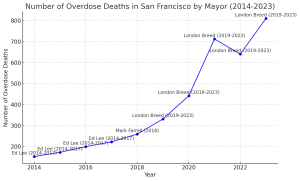
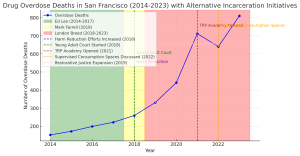
Let’s start with the numbers. From 2014 to 2023, San Francisco experienced a sharp rise in drug overdose deaths. Under Ed Lee, overdose deaths increased by 46%. During Mark Farrell’s brief tenure, the increase was 16.7%. But under London Breed? Overdose deaths skyrocketed by 212.7%, an unprecedented escalation.

  • Ed Lee (2014-2017): 46% increase in overdose deaths
  • Mark Farrell (2018): 16.7% increase in overdose deaths
  • London Breed (2018-2023): 212.7% increase in overdose deaths

Under Breed, more than 3,000 San Franciscans have lost their lives to drug overdoses, many of these deaths tied to the rampant spread of fentanyl—a synthetic opioid 50 times more potent than heroin. While fentanyl was already present in the drug supply before her time, Breed’s policies enabled the crisis to spiral out of control.


Harm Reduction or Harm Creation?

The cornerstone of Breed’s public health strategy has been harm reduction—policies designed to reduce the negative consequences of drug use rather than eliminate it altogether. This includes clean needle programs, naloxone distribution, and her administration’s active push for supervised drug consumption sites. But with fentanyl’s extreme potency, these strategies have done little more than prolong the inevitable: death.

Instead of confronting the root of the crisis—addiction—Breed’s policies have normalized drug use. Supervised drug consumption sites, while touted as life-saving, are illegal under federal and state law. Despite this, Breed’s administration has been hell-bent on bringing these sites to the city, turning San Francisco into a lawless zone for drug users. These policies do not just overlook the problem; they perpetuate it.


Supervised Consumption Sites: Illegal and Dangerous

Supervised drug consumption sites are the most blatant example of Breed’s failed leadership. These sites, where individuals can legally use drugs under supervision, directly violate the Controlled Substances Act and California state law. Despite these legal barriers, Breed’s administration has pushed forward with plans to open these sites, effectively encouraging illegal activity within the city’s borders.

Let’s be clear: supervised drug consumption sites may reduce overdose deaths in the short term, but they also facilitate continued drug use. These policies send a message that drug use is acceptable, even supported. By creating these safe zones for drug users, Breed is actively attracting addicts to San Francisco. The result is not just more drug use but an influx of users from other cities and states, drawn to San Francisco by its reputation as a place where drug use is easy and consequence-free.

This is not harm reduction—this is harm creation.


Fentanyl: The Deadly Consequence of Breed’s Policies

Fentanyl’s extreme addictive nature and lethality cannot be overstated. Even the smallest miscalculation in dosage can lead to immediate overdose and death. Breed’s harm reduction policies, while perhaps effective with less potent drugs, fall dangerously short in the face of fentanyl. The distribution of clean needles, naloxone, and discussions of supervised consumption sites have not curbed the crisis—they have fueled it.

Breed’s refusal to prioritize aggressive treatment options or enforce stricter regulations on drug use has left San Francisco drowning in fentanyl. And with more people than ever flocking to the city for its lenient drug policies, the situation is spiraling out of control. Instead of stopping the flood, Breed has opened the floodgates.


Attracting More Drug Users to San Francisco

It is no coincidence that San Francisco has seen an increase in its homeless and drug-using population. Breed’s policies have created a magnet for those seeking a city where drugs can be obtained, used, and even facilitated by city officials. San Francisco has become a place where public drug use is rampant, and the city’s resources are overwhelmed.

By failing to enforce the law and instead advocating for policies that directly contradict federal and state drug laws, Breed and her administration have attracted thousands of drug users to the city, making the crisis worse. She violated her oath of office by promoting illegal activity and turning San Francisco into a sanctuary for addiction rather than a city of rehabilitation and recovery.


A Betrayal of Public Trust

Breed’s policies do more than violate the law—they betray the public trust. Every politician swears an oath to uphold the law, but Breed’s active support for policies that enable illegal drug use directly contravenes this responsibility. Instead of focusing on long-term solutions to addiction, Breed has perpetuated short-term fixes that do nothing to address the underlying causes of the crisis.

Supervised consumption sites, clean needle programs, and naloxone distribution are not enough to combat the power of fentanyl. By enabling drug use, Breed is not just turning her back on the law—she is turning her back on the people of San Francisco. The thousands of overdose deaths on her watch are a direct result of her failed leadership.


The Lives Lost on Breed’s Watch

With more than 3,000 overdose deaths under her leadership, London Breed has overseen the deadliest period in San Francisco’s modern history. Harm reduction, as practiced by her administration, has failed to reduce harm. Instead, it has created an environment where addiction flourishes, drug users flock to the city, and public safety is jeopardized.

The city needs leadership that will stand up to this crisis with real solutions—treatment, enforcement, and rehabilitation—not policies that enable addiction. London Breed has failed San Francisco. It’s time to recognize the deadly impact of her decisions and demand accountability.

San Francisco’s residents deserve a city that fights for their safety, not one that perpetuates harm. The crisis must end, and it begins with rejecting the failed policies of “Fentanyl Breed.”


Chart 1: Overdose Deaths Under London Breed

Fentanyl Breed: 3,000+ Deaths on Her Watch


Chart 2: Timeline of Harm Reduction Efforts and Overdose Deaths

Fentanyl Breed: 3,000+ Deaths on Her Watch


“Paid for by the San Francisco Deputy Sheriffs’ Association PAC. Not authorized by a candidate or committee controlled by a candidate. Financial disclosures are available at sfethics.org.”